
5-academics-conservation-bio
Students uncover the wild side of Loyola's campus
Open areas such as parks, golf courses, college campuses, and cemeteries provide vital habitat for urban wildlife. Within Chicago's dense Edgewater neighborhood, wild animals make use of green spaces on Loyola's Lake Shore Campus and in the nearby Graceland Cemetery, offering a living lab for SES students.
"It's been incredibly gratifying seeing the students become involved, take ownership over the project, and invest their time in studying the wildlife." Mary Dinsmore, PhD
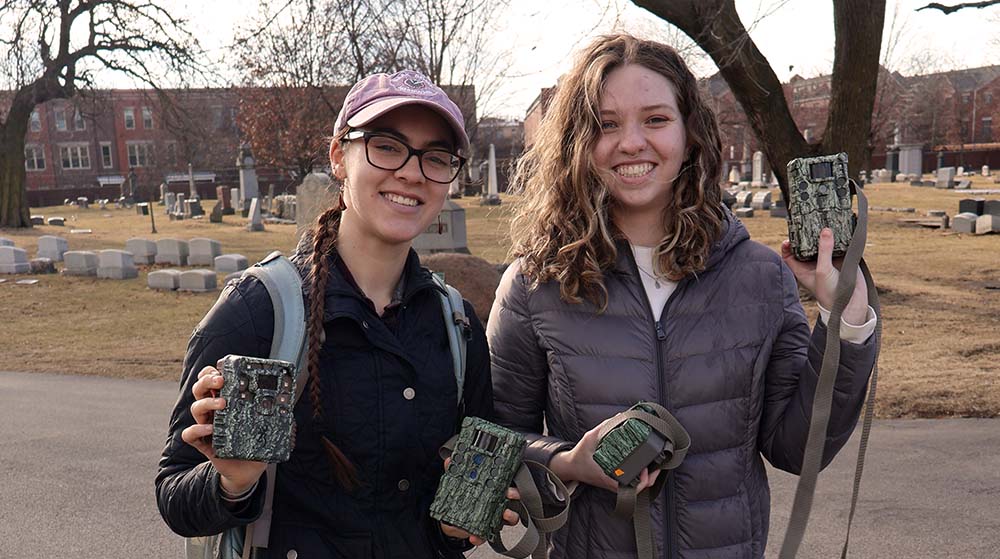
Students installed camera traps at Graceland Cemetery to capture photos and videos of wildlife.
This spring, a group of SES students conducted a semester-long research project to understand the diversity of wildlife living in these urban green areas, and how people can make room for urban wildlife. Mary Dinsmore, PhD, developed the project for her Conservation Biology Lab course.
"My goal for the course is to have students work together to construct a conservation project from inception to implementation to analysis," said Dinsmore. "I want this project to be hands-on so they can take the skills they gain and feel prepared to be active researchers and conservation practitioners after they graduate."
To prepare students to study the local fauna at these two sites, Dinsmore taught the class to use wildlife monitoring equipment and several types of software for project management and data analysis.
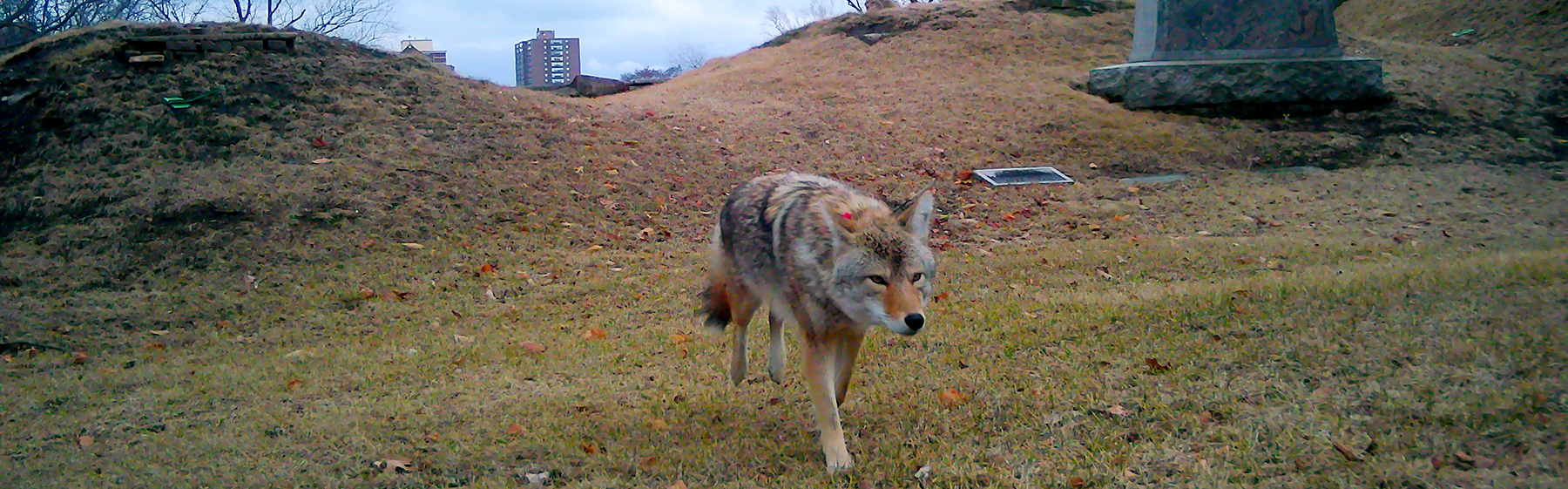
Students installed monitoring equipment and conducted regular walk-throughs at each site. They analyzed video and audio recordings to identify the animal species present at each study site. The images revealed squirrels, songbirds, rats, mice, rabbits, and raccoons. The team also observed a family of coyotes living in Graceland Cemetery, and they found coyotes on Loyola's campus for the first time since 2013. Across the two study sites, they found six bat species and nearly 70 bird species.
The research team also explored how people relate to the wild creatures around them by surveying community members about their attitudes toward urban wildlife. Most survey respondents said they enjoyed seeing wildlife and would support conservation efforts.
At the end of the semester, the student researchers presented their results to members of the Loyola community, Graceland staff and visitors, and interested neighbors. They shared their observations and recommended actions to conserve wildlife and avoid negative interactions with wild animals.
Conservation recommendations for the Lake Shore Campus included limiting the use of rat poison and road salts, which can be toxic to wildlife. The team noted the Graceland Cemetery managers could support wildlife there by replacing some sections of turf with more natural landscaping featuring native shrubs, grasses, and wildflowers. Based on strong community interest in learning more about plants and animals found in the cemetery, the team also suggested offering wildlife education programming.
Dinsmore said she was thrilled to see how the students grew over the semester and gained confidence as researchers.
"It's been incredibly gratifying seeing the students become involved, take ownership over the project, and invest their time in studying the wildlife," she said. "Additionally, part of conservation is dissemination and sharing results. It was so rewarding to see the students' professionalism and dedication shine through in their final presentation."
This spring, a group of SES students conducted a semester-long research project to understand the diversity of wildlife living in these urban green areas, and how people can make room for urban wildlife. Mary Dinsmore, PhD, developed the project for her Conservation Biology Lab course.
"My goal for the course is to have students work together to construct a conservation project from inception to implementation to analysis," said Dinsmore. "I want this project to be hands-on so they can take the skills they gain and feel prepared to be active researchers and conservation practitioners after they graduate."
To prepare students to study the local fauna at these two sites, Dinsmore taught the class to use wildlife monitoring equipment and several types of software for project management and data analysis.
Students installed monitoring equipment and conducted regular walk-throughs at each site. They analyzed video and audio recordings to identify the animal species present at each study site. The images revealed squirrels, songbirds, rats, mice, rabbits, and raccoons. The team also observed a family of coyotes living in Graceland Cemetery, and they found coyotes on Loyola's campus for the first time since 2013. Across the two study sites, they found six bat species and nearly 70 bird species.
The research team also explored how people relate to the wild creatures around them by surveying community members about their attitudes toward urban wildlife. Most survey respondents said they enjoyed seeing wildlife and would support conservation efforts.
At the end of the semester, the student researchers presented their results to members of the Loyola community, Graceland staff and visitors, and interested neighbors. They shared their observations and recommended actions to conserve wildlife and avoid negative interactions with wild animals.
Conservation recommendations for the Lake Shore Campus included limiting the use of rat poison and road salts, which can be toxic to wildlife. The team noted the Graceland Cemetery managers could support wildlife there by replacing some sections of turf with more natural landscaping featuring native shrubs, grasses, and wildflowers. Based on strong community interest in learning more about plants and animals found in the cemetery, the team also suggested offering wildlife education programming.
Dinsmore said she was thrilled to see how the students grew over the semester and gained confidence as researchers.
"It's been incredibly gratifying seeing the students become involved, take ownership over the project, and invest their time in studying the wildlife," she said. "Additionally, part of conservation is dissemination and sharing results. It was so rewarding to see the students' professionalism and dedication shine through in their final presentation."